Spider Silk Protein Shirts: Biotech Disrupts the Definition of Luxury

Aug 13, 2025 By

The fashion industry stands on the brink of a biological revolution as spider silk protein shirts emerge from laboratories to challenge the very definition of luxury. For centuries, opulence in apparel has been synonymous with rare materials and artisanal craftsmanship – think Italian cashmere, Swiss lace, or Japanese denim. But in a quiet laboratory in San Francisco, a team of biotechnologists has been cultivating vats of silky protein filaments that could render these traditional status symbols obsolete.

What began as a military-funded research project into bulletproof materials has evolved into one of fashion's most intriguing disruptors. Unlike traditional silk farming that requires boiling thousands of silkworms alive, this new material grows through fermentation processes similar to brewing beer. The result? A fabric that drapes like liquid gold while being stronger than steel by weight, with a carbon footprint that makes even the most eco-conscious cashmere blush.

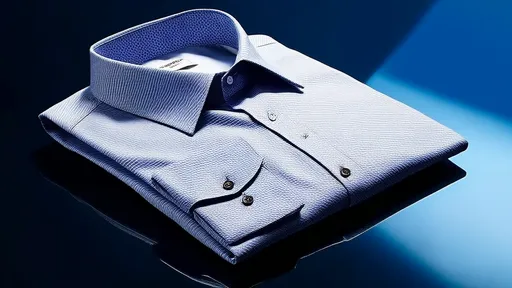
The first commercial batches of these shirts arrived in select boutiques last season with price tags hovering around $3,000 – not for some gimmicky "concept garment," but for a fully wearable, machine-washable piece that feels like a second skin. Early adopters describe an almost eerie sensation when first wearing the material; it somehow manages to be both cooling and warming simultaneously, adapting to body temperature with an intelligence that seems almost alien.

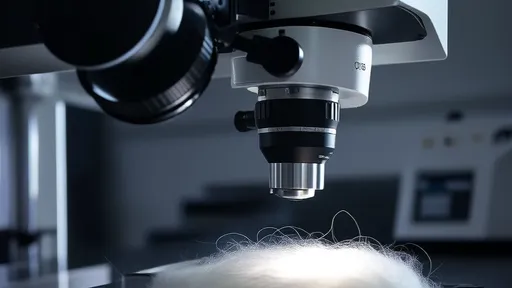
Behind this technological marvel lies a fascinating biological hack. Scientists isolated the dragline silk genes from Nephila clavipes spiders – creatures whose silk has supported their weight while dangling from 80-foot jungle canopies for millions of years. Through synthetic biology techniques, these genes were inserted into yeast cells that now produce the protein in fermentation tanks. The liquid silk is then extruded through microscopic holes to form fibers, mimicking the spider's natural spinning process.

Luxury brands initially scoffed at the idea that a lab-grown material could compete with their centuries-old heritage. That skepticism evaporated when a single spider silk tie (an early test product) survived being run over by a tank during a military demonstration. The material's tensile strength surpasses high-grade alloy steel while remaining flexible enough for couture applications. Suddenly, the appeal of clothing that could theoretically stop a bullet while looking like it came from Milan's finest ateliers became impossible to ignore.

Environmental considerations add another layer of disruption. Traditional textile production ranks among the world's most polluting industries, with cotton farming alone consuming 24% of global insecticides. Spider silk protein requires no pesticides, minimal water, and can be produced anywhere with basic fermentation equipment – potentially redistributing textile manufacturing away from traditional hubs. The shirts biodegrade completely within months when composted, solving fashion's growing microplastic crisis.

Yet the true revolution may be philosophical. For generations, luxury derived value from scarcity and human craftsmanship. A single artisan might spend 600 hours hand-stitching a jacket to justify its five-figure price. Biotechnology introduces a new paradigm where value stems from scientific achievement and molecular perfection. The shirt in your closet isn't rare because only a few Nepalese herders can raise the right goats – it's rare because it represents humanity's mastery over nature's most extraordinary materials at the genetic level.

Early production challenges kept quantities extremely limited, with waiting lists stretching over a year. The fermentation process remains finicky – one batch might produce fibers with perfect drape, while the next comes out slightly too stiff for shirts (though perfect for surgical sutures or parachute cords). This unpredictability adds an element of serendipity; each shirt carries subtle variations like natural materials, despite being grown in stainless steel tanks.

Critics argue these shirts represent technology's cold encroachment into fashion's humanistic traditions. Proponents counter that wearing a spider silk shirt connects the wearer to deeper biological wonders than any hand-stitched embroidery ever could. After all, you're not just wearing a shirt – you're wearing millions of years of arachnid evolution, decoded and reimagined through human ingenuity. In that sense, it may be the most profoundly natural luxury item ever created.

The implications stretch far beyond shirts. Imagine entire wardrobes grown from customized proteins – winter coats with built-in antifreeze molecules from Arctic fish, or workout gear that strengthens like tendons when stretched. The spider silk shirt isn't just a product; it's the first thread in rewinding fashion's entire genetic code. And that may be the most luxurious proposition of all – not just wearing excellence, but wearing the future itself.

Recommend Posts
Fashion

Luxury Rebound: The Revenge of Maximalism in Gen Z

By /Aug 13, 2025

The fashion cycle has always been a pendulum swinging between extremes, but few could have predicted the sudden resurgence of maximalism among Gen Z. Just as the world seemed to settle into the quiet luxury trend—think Loro Piana cashmere and understated Bottega Veneta—a riot of color, texture, and unabashed excess is staging a dramatic comeback. This isn’t your grandmother’s maximalism, though. The new wave is sharper, more self-aware, and deeply intertwined with digital culture.
Fashion

National Brand Goes West 2.0: Erke's Milan Flagship Store Makes a Comeback"

By /Aug 13, 2025

In the heart of Milan’s fashion district, a new player has emerged, turning heads and challenging the dominance of Western sportswear giants. Hongxing Erke, a Chinese sportswear brand once overshadowed by international competitors, has made a bold statement with its flagship store in Milan. This move marks a significant milestone in the brand’s "Go West 2.0" strategy, an ambitious plan to expand its global footprint and redefine its image.
Fashion

Museum IP Battle: The Metropolitan's Fashion Licensing Empire

By /Aug 13, 2025

The Metropolitan Museum of Art has long been revered as a bastion of culture, housing some of the world’s most iconic artworks. But in recent years, the museum has expanded its influence far beyond its hallowed halls, venturing into the lucrative world of fashion licensing. The Met’s foray into fashion collaborations has sparked a fierce battle among brands vying for the prestige of associating with its illustrious name. This isn’t just about clothing—it’s about legacy, exclusivity, and the power of cultural branding in an increasingly competitive market.
Fashion

Fast Fashion Collaboration Trap: Investigation into the Exploitation of Designer Value

By /Aug 13, 2025

The glittering spectacle of fast fashion collaborations has become a cultural phenomenon, where high-street giants routinely partner with avant-garde designers or celebrity creatives. These limited-edition capsule collections generate frenzied queues outside stores and crash websites within minutes of launch. Yet behind the carefully orchestrated hype lies an uncomfortable truth: these partnerships often function as sophisticated mechanisms for extracting and commodifying creative labor while offering designers shockingly little in return.
Fashion

The Paradox of Niche Brands: When Indie Designs Go Viral

By /Aug 13, 2025

The fashion industry thrives on exclusivity, yet it simultaneously craves mass appeal. This paradox lies at the heart of what we now call the Indie Brand Paradox—the phenomenon where independent designers achieve mainstream success, only to face an identity crisis. When a niche label becomes a viral sensation, it must navigate the treacherous waters between authenticity and commercial viability. The very elements that made it unique—limited production runs, artisanal craftsmanship, subversive designs—often become casualties of scalability.
Fashion

Intelligent Knitting: Thermosensitive Fibers Automatically Regulate Ventilation Holes

By /Aug 13, 2025

The textile industry is undergoing a quiet revolution as smart knitting technologies merge with advanced material science. At the forefront of this innovation lies temperature-sensitive fibers capable of autonomously adjusting garment breathability—a breakthrough that could redefine comfort in athletic wear, medical textiles, and everyday apparel. Unlike traditional moisture-wicking fabrics that rely on passive diffusion, these dynamic textiles physically reconfigure their structure in response to thermal stimuli.
Fashion

Creative Director Survival Report: Breaking the Three-Year Curse Solution

By /Aug 13, 2025

The creative industry moves at breakneck speed, and nowhere is this more evident than in the precarious tenure of creative directors. For years, the "three-year curse" has haunted the profession—that mysterious point when even the most brilliant minds seem to hit an invisible wall. But something unexpected is happening across agencies and in-house studios worldwide: a growing number of creative leaders are cracking the code to longevity.
Fashion

Luminous Corduroy: Phosphorescent Materials Create Star Tracks in the Dark

By /Aug 13, 2025

In an era where urban illumination often drowns out celestial wonders, a quiet revolution in textile technology is bringing the cosmos closer to home. Glow-in-the-dark corduroy fabric, embedded with advanced photoluminescent compounds, has emerged as an unexpected medium for capturing the ephemeral beauty of star trails within domestic spaces. This innovative material transcends its utilitarian origins, transforming ordinary home textiles into canvases that preserve celestial movements with remarkable fidelity.
Fashion

Spider Silk Protein Shirts: Biotech Disrupts the Definition of Luxury

By /Aug 13, 2025

The fashion industry stands on the brink of a biological revolution as spider silk protein shirts emerge from laboratories to challenge the very definition of luxury. For centuries, opulence in apparel has been synonymous with rare materials and artisanal craftsmanship – think Italian cashmere, Swiss lace, or Japanese denim. But in a quiet laboratory in San Francisco, a team of biotechnologists has been cultivating vats of silky protein filaments that could render these traditional status symbols obsolete.
Fashion

Self-Healing Denim: Microencapsulation Repair Technology Overcomes Hole Challenges

By /Aug 13, 2025

In a groundbreaking development for sustainable fashion, scientists have unveiled a revolutionary self-healing denim technology that could forever change how we deal with worn-out jeans. The innovation centers around microcapsule repair systems embedded within the fabric itself, offering what experts are calling "the holy grail" of textile durability.
Fashion

0.08mm Cashmere Extreme: Breakthrough in Nano Spinning Technology

By /Aug 13, 2025

The textile industry has long been chasing the elusive dream of spinning ultra-fine cashmere fibers, pushing the boundaries of what was once considered physically impossible. For decades, the 0.08mm diameter mark stood as an unbreakable barrier – until now. A groundbreaking development in nano-spinning technology has shattered this limitation, opening doors to a new era of luxury fabrics with unprecedented softness and thermal properties.
Fashion

Morandi Trap: When Low Saturation Becomes a New Aesthetic Dictate

By /Aug 13, 2025

In recent years, the muted, understated palette of Giorgio Morandi has seeped into every corner of visual culture—interior design, fashion, branding, and even digital interfaces. What began as an appreciation for subtlety has morphed into a pervasive aesthetic regime, one that dictates taste under the guise of sophistication. The "Morandi tone," with its chalky pinks, dusty blues, and washed-out beiges, is now the unofficial uniform of contemporary minimalism. But as this trend hardens into dogma, a quiet rebellion brews: when does restraint become repression?
Fashion

Dynamic Gradient Breakthrough: Liquid Crystal Fabric Achieves Automatic Color Change

By /Aug 13, 2025

In a groundbreaking leap for smart textiles, researchers have unveiled liquid crystal fabrics capable of dynamic color-shifting without external power sources. This innovation promises to revolutionize industries from fashion to military camouflage by creating materials that adapt to environmental changes in real time.
Fashion

Mineral Dye Revolution: Cosmic Deep Blue Dye Made from Meteorite Powder

By /Aug 13, 2025

In a groundbreaking fusion of celestial wonder and terrestrial artistry, scientists and artisans have unlocked the secrets of the cosmos to create an extraordinary new pigment: cosmic deep blue, derived from meteorite powder. This revolutionary development in mineral dyes promises to redefine the boundaries of color, sustainability, and human connection with the universe.
Fashion

Fluorescent Taming Guide: Breaking Through Office Safety Dress Code

By /Aug 13, 2025

In the corporate jungle where neutral tones reign supreme, a quiet revolution is brewing. Fluorescent hues—long banished to construction sites and rave parties—are making an unexpected comeback in professional settings. This chromatic insurgency isn’t about reckless self-expression; it’s a calculated strategy for visibility, safety, and psychological impact in modern workplaces.
Fashion

Urban Spectrum Showdown: Shanghai Blue vs. London Fog in Fashion Discourse

By /Aug 13, 2025

In the ever-evolving world of fashion, color serves as both a cultural signifier and a powerful tool for self-expression. Two iconic urban hues—Shanghai Blue and London Fog—have recently emerged as competing chromatic languages in global style narratives. These colors transcend mere aesthetic preferences; they embody distinct philosophies of urban life, historical legacies, and contemporary aspirations. The clash (and occasional fusion) of these tones reveals deeper currents about East-West fashion diplomacy in the post-pandemic era.
Fashion

The Paradox of 3D Sculpting from 2D: Secrets of Transforming Flat Patterns into Three-Dimensional Art

By /Aug 13, 2025

The art of transforming two-dimensional patterns into three-dimensional sculptures has long fascinated designers, mathematicians, and artists alike. At the heart of this transformation lies what some refer to as the "paradox of drape"—the seemingly magical leap from flat fabric or paper to a form that occupies space with volume, movement, and depth. This process, whether in fashion design, origami, or architectural modeling, challenges our understanding of how surfaces behave when freed from their planar constraints.
Fashion

Interstellar Universe: The Re-creation of New Chinese Symbols in a Space Theme"

By /Aug 13, 2025

The vast expanse of space has always served as a mirror to human culture, reflecting our deepest symbols and aspirations back to Earth. In recent years, an intriguing aesthetic fusion has emerged from China's space program - what cultural theorists are calling "Buckle Cosmos" - where traditional Chinese knotting techniques and architectural motifs collide with futuristic space technology.
Fashion

The Renaissance of Men's Lace: Gothic Aesthetics Returns to the Mainstream

By /Aug 13, 2025

The resurgence of lace in menswear is more than a fleeting trend—it’s a cultural reclamation. Once relegated to the fringes of fashion, lace is now stepping boldly into the mainstream, driven by a renewed fascination with Gothic aesthetics. Designers and wearers alike are embracing its delicate intricacy, not as a sign of fragility, but as a statement of subversion and sophistication. This revival isn’t merely about fabric; it’s a rebellion against rigid gender norms and a celebration of historical opulence reimagined for the modern man.
Fashion

Lace Heavy Metal: The Experimental Collision of Biker Jackets and Victorian Style

By /Aug 13, 2025

The fashion world thrives on contradictions, and few are as deliciously jarring as the marriage of lace and heavy metal. This season, designers are orchestrating a high-voltage collision between the delicate femininity of Victorian-inspired lace and the rebellious edge of motorcycle jackets. The result? A sartorial experiment that feels both nostalgic and dangerously modern.