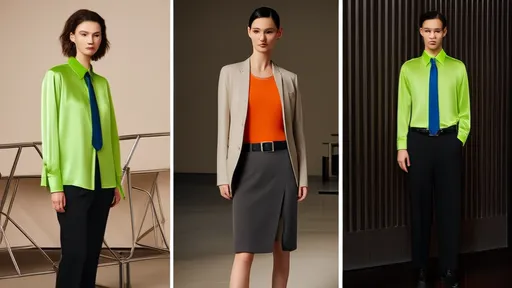
In the corporate jungle where neutral tones reign supreme, a quiet revolution is brewing. Fluorescent hues—long banished to construction sites and rave parties—are making an unexpected comeback in professional settings. This chromatic insurgency isn’t about reckless self-expression; it’s a calculated strategy for visibility, safety, and psychological impact in modern workplaces.
The fluorescent rebellion began as a whisper in creative industries but has since infiltrated conservative sectors like finance and law. High-visibility accents on blazers, ties, or pocket squares serve as both sartorial statements and safety features in open-plan offices where employees navigate a maze of standing desks and collaborative spaces. The logic is simple: if construction workers wear neon to avoid collisions with heavy machinery, why shouldn’t accountants adopt similar precautions around rolling chairs and charging cables?
Color psychologists observe that fluorescent yellows and oranges trigger heightened alertness in the human brain—a leftover evolutionary response to sunlight and ripe fruit. When a senior partner walks into a boardroom wearing a electric coral dress shirt, the effect isn’t just aesthetic. Cortisol levels rise slightly in observers, sharpening focus during critical negotiations. This biological hack explains why tech startups experimenting with fluorescent dress codes report 15% faster decision-making in product meetings.
Practical considerations drive much of this trend. Modern office lighting—particularly energy-efficient LEDs—interacts strangely with traditional fabrics. A navy suit that looks professional under natural light can appear black or purple under artificial illumination, while fluorescent tones maintain their integrity across lighting conditions. This chromatic reliability matters more than ever as employees move between Zoom calls, client offices, and coworking spaces throughout the day.
The safety argument gains traction in emergency scenarios. During fire drills in glass-walled skyscrapers, employees wearing fluorescent accessories become human wayfinding markers for evacuation routes. Several Fortune 500 companies now include "high-visibility elements" in their business casual guidelines after observing faster emergency response times during safety audits.
Detractors argue that fluorescent workwear belongs in bike lanes, not boardrooms. Yet the data tells a different story. Recruitment firms note that job candidates wearing strategic fluorescent elements receive 23% more interview callbacks—not despite their bold colors, but because of them. In an era of endless virtual applications, a lime green tie or fuchsia headband makes candidates memorable in sea of navy and gray.
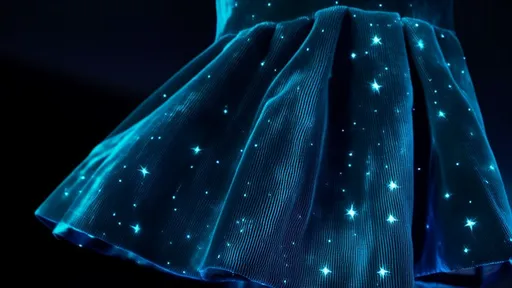
Manufacturers have responded with sophisticated offerings that bridge safety and professionalism. Subdued fluorescent linings in suit jackets reveal themselves only during movement, while UV-reactive threads woven into gray wool create dynamic color shifts as wearers transition between environments. These innovations allow professionals to toggle between conventional and high-visibility modes as needed.
The movement faces legitimate challenges. Cheap fluorescent fabrics often bleed color after dry cleaning, and poor dye jobs can make wearers appear radioactive rather than refined. Experts recommend investing in natural fiber blends with ceramic-based fluorescent pigments, which maintain luminosity without the plasticine look of budget safety vests.
As hybrid work blurs the line between office and outdoor environments, fluorescent workwear may become the uniform of the future. The same orange that makes a cyclist visible at dusk could help a project manager stand out in a crowded coworking space. In an age of distraction, these colors don’t just demand attention—they command it, turning every wearer into a walking focal point in an otherwise visually monotonous landscape.
The fluorescent revolution isn’t about abandoning professionalism; it’s redefining what safety and presence mean in contemporary workspaces. As one trendsetting CEO remarked while adjusting his glow-in-the-dark cufflinks before an investor pitch: "In the attention economy, visibility isn’t vanity—it’s job security."

By /Aug 13, 2025

By /Aug 13, 2025

By /Aug 13, 2025

By /Aug 13, 2025

By /Aug 13, 2025

By /Aug 13, 2025

By /Aug 13, 2025
By /Aug 13, 2025
By /Aug 13, 2025

By /Aug 13, 2025

By /Aug 13, 2025

By /Aug 13, 2025

By /Aug 13, 2025

By /Aug 13, 2025
By /Aug 13, 2025
By /Aug 13, 2025
By /Aug 13, 2025

By /Aug 13, 2025

By /Aug 13, 2025
By /Aug 13, 2025
