Interstellar Universe: The Re-creation of New Chinese Symbols in a Space Theme"

Aug 13, 2025 By

The vast expanse of space has always served as a mirror to human culture, reflecting our deepest symbols and aspirations back to Earth. In recent years, an intriguing aesthetic fusion has emerged from China's space program - what cultural theorists are calling "Buckle Cosmos" - where traditional Chinese knotting techniques and architectural motifs collide with futuristic space technology.

At the heart of this movement lies the humble pan buckle, an ancient fastening device that once secured everything from imperial robes to wooden architecture. Today, this unassuming cultural artifact is being reimagined as a visual language for China's celestial ambitions. The Tianhe core module of China's space station features structural elements inspired by interlocking buckle designs, while spacesuits incorporate decorative knot patterns reminiscent of traditional Chinese garments.

This isn't mere ornamentation. The buckle's symbolic weight in Chinese culture - representing connection, security, and the binding of disparate elements - makes it particularly suited for space exploration. Where Western space aesthetics often emphasize smooth, seamless surfaces suggesting infinite expansion, the Buckle Cosmos visual language celebrates intentional connection points, the places where separate modules deliberately come together, much like the wooden joints in traditional Chinese architecture that required no nails.

The Chang'e lunar missions provided some of the most striking examples of this design philosophy. The lunar landers featured gold-colored metallic surfaces etched with patterns derived from ancient bronze vessel designs, while the rover's unfolding mechanism employed a principle similar to traditional folding screens. Even the mission patches incorporated intricate knot motifs, transforming celestial navigation into a form of cultural wayfinding.

What makes this aesthetic movement particularly fascinating is its temporal duality. The designs simultaneously reference China's 3,000-year-old material culture while appearing utterly futuristic. A solar panel array unfolding in space echoes the geometry of a Song dynasty folding fan; the segmented design of space station modules recalls the interlocking wooden brackets (dougong) that have supported Chinese roofs for millennia.

This neo-Chinese space aesthetic extends beyond hardware into mission branding and public outreach. Mission control centers feature calligraphic wall installations that reinterpret ancient astronomical charts, while press materials employ ink wash aesthetics in visualizing orbital trajectories. The effect creates a cultural continuum between China's historical stargazing traditions and its contemporary space achievements.

Critically, the Buckle Cosmos isn't about nostalgia. It represents an active reworking of cultural symbols to meet the psychological and technological demands of spacefaring civilization. The pan buckle's transformation from terrestrial fastener to cosmic connector mirrors humanity's own transition from earthbound species to space explorers. In Chinese space imagery, we see the buckle motif appearing in docking mechanisms, spacesuit closures, and even in the graphical representations of orbital paths - always emphasizing secure connection in the void.

This design language also serves a diplomatic function. Unlike the often impersonal, universalist aesthetics of international space imagery, China's neo-traditional approach offers immediately recognizable cultural markers. When the Tianwen-1 Mars mission deployed a rover shaped like a mythical jade rabbit (evoking the lunar Jade Rabbit of Chinese folklore), it communicated complex cultural narratives through form alone.

The philosophical underpinnings of this movement bear examination. Traditional Chinese cosmology viewed heaven and earth as interconnected realms, with humanity occupying the mediating space between. Contemporary Chinese space design seems to literalize this worldview, creating physical objects that embody celestial-terrestrial connections. The unfolding mechanisms of solar panels recall the spreading of scholar's scrolls; the segmented body of a Mars rover suggests the articulated joints of temple guardian statues.

Even the color schemes tell a story. Where early space programs favored sterile whites and grays, Chinese spacecraft increasingly incorporate vermilion, gold, and jade green - colors with deep cultural resonance. These aren't arbitrary choices but deliberate references to imperial architecture, ritual bronzes, and other artifacts that traditionally mediated between earthly and heavenly realms.

The Buckle Cosmos phenomenon raises fascinating questions about cultural expression in space. As humanity becomes an interplanetary species, which terrestrial symbols will we carry with us? How might ancient design solutions inform future space habitats? China's approach suggests that our cultural heritage may provide not just decorative inspiration but actual engineering insights for living beyond Earth.

Already, we're seeing this aesthetic influence spreading. International collaborations with Chinese space agencies have begun incorporating subtle buckle motifs in joint mission patches. Private space companies in Asia are experimenting with neo-traditional spacecraft interiors that blend ergonomics with Ming furniture aesthetics. Even space tourism concepts now feature zero-gravity adaptations of traditional Chinese garden design principles.

Perhaps most remarkably, this symbolic language appears to be resonating with younger generations. Social media platforms buzz with fan art reimagining ancient mythological creatures as astronauts, or classical landscape paintings as Mars vistas. The Buckle Cosmos has spawned its own vernacular creativity, suggesting that these neo-traditional space aesthetics fulfill a deep need for culturally grounded visions of the future.

As China's space ambitions grow - with planned lunar bases, asteroid missions, and crewed Mars flights - we can expect this design language to evolve further. Early concepts for moon habitats already show influences from circular courtyard architecture, while spacesuit prototypes incorporate layered silk-like materials. Each new mission becomes an opportunity to reinvent another aspect of cultural heritage for the space age.

Ultimately, the Buckle Cosmos represents more than a design trend. It signals a fundamental shift in how humanity might approach space exploration - not as a radical break from terrestrial culture, but as its continuation by other means. In the interlocking modules of space stations and the patterned surfaces of Mars rovers, we see the possibility of a future where our journey to the stars remains firmly tethered, like a well-fastened buckle, to the cultural wisdom of our earthly past.

The coming decades will reveal whether this neo-Chinese space aesthetic remains a national style or evolves into a broader interplanetary design language. But one thing seems certain: as humanity reaches for the cosmos, we won't be leaving our cultural symbols behind. Instead, like the adaptable pan buckle itself, we'll refashion them to meet the challenges of new frontiers, creating a visual poetry of connection across both space and time.
Recommend Posts
Fashion

Luxury Rebound: The Revenge of Maximalism in Gen Z

By /Aug 13, 2025

The fashion cycle has always been a pendulum swinging between extremes, but few could have predicted the sudden resurgence of maximalism among Gen Z. Just as the world seemed to settle into the quiet luxury trend—think Loro Piana cashmere and understated Bottega Veneta—a riot of color, texture, and unabashed excess is staging a dramatic comeback. This isn’t your grandmother’s maximalism, though. The new wave is sharper, more self-aware, and deeply intertwined with digital culture.
Fashion

National Brand Goes West 2.0: Erke's Milan Flagship Store Makes a Comeback"

By /Aug 13, 2025

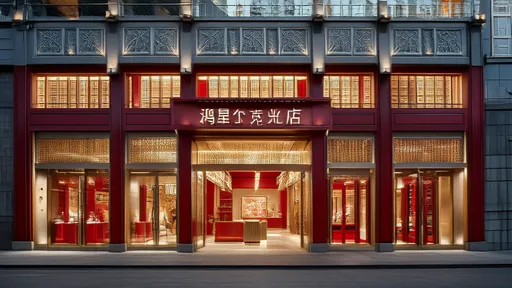
In the heart of Milan’s fashion district, a new player has emerged, turning heads and challenging the dominance of Western sportswear giants. Hongxing Erke, a Chinese sportswear brand once overshadowed by international competitors, has made a bold statement with its flagship store in Milan. This move marks a significant milestone in the brand’s "Go West 2.0" strategy, an ambitious plan to expand its global footprint and redefine its image.
Fashion

Museum IP Battle: The Metropolitan's Fashion Licensing Empire

By /Aug 13, 2025

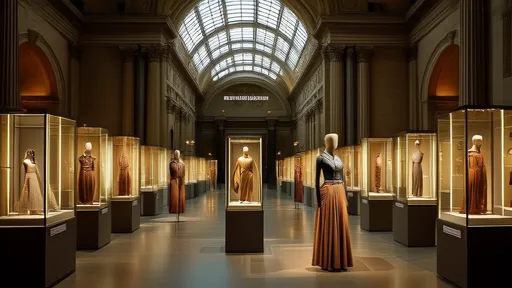
The Metropolitan Museum of Art has long been revered as a bastion of culture, housing some of the world’s most iconic artworks. But in recent years, the museum has expanded its influence far beyond its hallowed halls, venturing into the lucrative world of fashion licensing. The Met’s foray into fashion collaborations has sparked a fierce battle among brands vying for the prestige of associating with its illustrious name. This isn’t just about clothing—it’s about legacy, exclusivity, and the power of cultural branding in an increasingly competitive market.
Fashion

Fast Fashion Collaboration Trap: Investigation into the Exploitation of Designer Value

By /Aug 13, 2025

The glittering spectacle of fast fashion collaborations has become a cultural phenomenon, where high-street giants routinely partner with avant-garde designers or celebrity creatives. These limited-edition capsule collections generate frenzied queues outside stores and crash websites within minutes of launch. Yet behind the carefully orchestrated hype lies an uncomfortable truth: these partnerships often function as sophisticated mechanisms for extracting and commodifying creative labor while offering designers shockingly little in return.
Fashion

The Paradox of Niche Brands: When Indie Designs Go Viral

By /Aug 13, 2025

The fashion industry thrives on exclusivity, yet it simultaneously craves mass appeal. This paradox lies at the heart of what we now call the Indie Brand Paradox—the phenomenon where independent designers achieve mainstream success, only to face an identity crisis. When a niche label becomes a viral sensation, it must navigate the treacherous waters between authenticity and commercial viability. The very elements that made it unique—limited production runs, artisanal craftsmanship, subversive designs—often become casualties of scalability.
Fashion

Intelligent Knitting: Thermosensitive Fibers Automatically Regulate Ventilation Holes

By /Aug 13, 2025

The textile industry is undergoing a quiet revolution as smart knitting technologies merge with advanced material science. At the forefront of this innovation lies temperature-sensitive fibers capable of autonomously adjusting garment breathability—a breakthrough that could redefine comfort in athletic wear, medical textiles, and everyday apparel. Unlike traditional moisture-wicking fabrics that rely on passive diffusion, these dynamic textiles physically reconfigure their structure in response to thermal stimuli.
Fashion

Creative Director Survival Report: Breaking the Three-Year Curse Solution

By /Aug 13, 2025

The creative industry moves at breakneck speed, and nowhere is this more evident than in the precarious tenure of creative directors. For years, the "three-year curse" has haunted the profession—that mysterious point when even the most brilliant minds seem to hit an invisible wall. But something unexpected is happening across agencies and in-house studios worldwide: a growing number of creative leaders are cracking the code to longevity.
Fashion

Luminous Corduroy: Phosphorescent Materials Create Star Tracks in the Dark

By /Aug 13, 2025

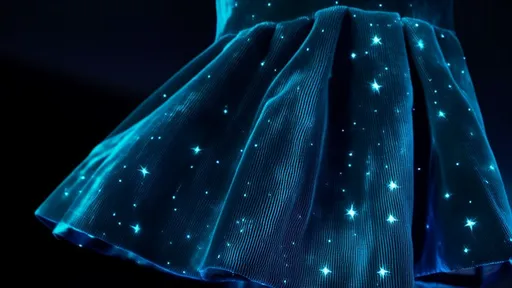
In an era where urban illumination often drowns out celestial wonders, a quiet revolution in textile technology is bringing the cosmos closer to home. Glow-in-the-dark corduroy fabric, embedded with advanced photoluminescent compounds, has emerged as an unexpected medium for capturing the ephemeral beauty of star trails within domestic spaces. This innovative material transcends its utilitarian origins, transforming ordinary home textiles into canvases that preserve celestial movements with remarkable fidelity.
Fashion

Spider Silk Protein Shirts: Biotech Disrupts the Definition of Luxury

By /Aug 13, 2025

The fashion industry stands on the brink of a biological revolution as spider silk protein shirts emerge from laboratories to challenge the very definition of luxury. For centuries, opulence in apparel has been synonymous with rare materials and artisanal craftsmanship – think Italian cashmere, Swiss lace, or Japanese denim. But in a quiet laboratory in San Francisco, a team of biotechnologists has been cultivating vats of silky protein filaments that could render these traditional status symbols obsolete.
Fashion

Self-Healing Denim: Microencapsulation Repair Technology Overcomes Hole Challenges

By /Aug 13, 2025

In a groundbreaking development for sustainable fashion, scientists have unveiled a revolutionary self-healing denim technology that could forever change how we deal with worn-out jeans. The innovation centers around microcapsule repair systems embedded within the fabric itself, offering what experts are calling "the holy grail" of textile durability.
Fashion

0.08mm Cashmere Extreme: Breakthrough in Nano Spinning Technology

By /Aug 13, 2025

The textile industry has long been chasing the elusive dream of spinning ultra-fine cashmere fibers, pushing the boundaries of what was once considered physically impossible. For decades, the 0.08mm diameter mark stood as an unbreakable barrier – until now. A groundbreaking development in nano-spinning technology has shattered this limitation, opening doors to a new era of luxury fabrics with unprecedented softness and thermal properties.
Fashion

Morandi Trap: When Low Saturation Becomes a New Aesthetic Dictate

By /Aug 13, 2025

In recent years, the muted, understated palette of Giorgio Morandi has seeped into every corner of visual culture—interior design, fashion, branding, and even digital interfaces. What began as an appreciation for subtlety has morphed into a pervasive aesthetic regime, one that dictates taste under the guise of sophistication. The "Morandi tone," with its chalky pinks, dusty blues, and washed-out beiges, is now the unofficial uniform of contemporary minimalism. But as this trend hardens into dogma, a quiet rebellion brews: when does restraint become repression?
Fashion

Dynamic Gradient Breakthrough: Liquid Crystal Fabric Achieves Automatic Color Change

By /Aug 13, 2025

In a groundbreaking leap for smart textiles, researchers have unveiled liquid crystal fabrics capable of dynamic color-shifting without external power sources. This innovation promises to revolutionize industries from fashion to military camouflage by creating materials that adapt to environmental changes in real time.
Fashion

Mineral Dye Revolution: Cosmic Deep Blue Dye Made from Meteorite Powder

By /Aug 13, 2025

In a groundbreaking fusion of celestial wonder and terrestrial artistry, scientists and artisans have unlocked the secrets of the cosmos to create an extraordinary new pigment: cosmic deep blue, derived from meteorite powder. This revolutionary development in mineral dyes promises to redefine the boundaries of color, sustainability, and human connection with the universe.
Fashion

Fluorescent Taming Guide: Breaking Through Office Safety Dress Code

By /Aug 13, 2025

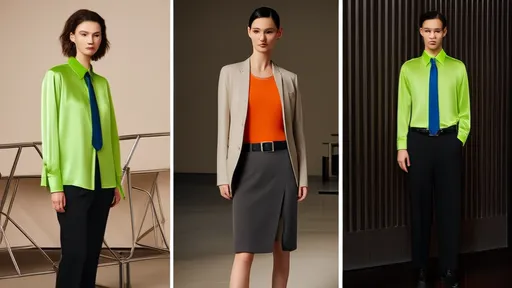
In the corporate jungle where neutral tones reign supreme, a quiet revolution is brewing. Fluorescent hues—long banished to construction sites and rave parties—are making an unexpected comeback in professional settings. This chromatic insurgency isn’t about reckless self-expression; it’s a calculated strategy for visibility, safety, and psychological impact in modern workplaces.
Fashion

Urban Spectrum Showdown: Shanghai Blue vs. London Fog in Fashion Discourse

By /Aug 13, 2025

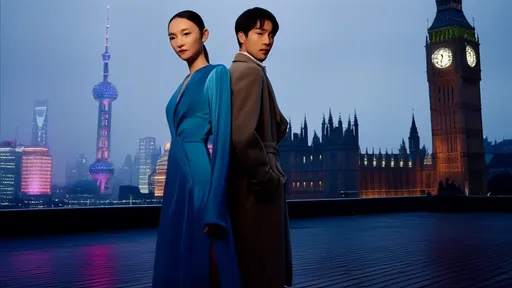
In the ever-evolving world of fashion, color serves as both a cultural signifier and a powerful tool for self-expression. Two iconic urban hues—Shanghai Blue and London Fog—have recently emerged as competing chromatic languages in global style narratives. These colors transcend mere aesthetic preferences; they embody distinct philosophies of urban life, historical legacies, and contemporary aspirations. The clash (and occasional fusion) of these tones reveals deeper currents about East-West fashion diplomacy in the post-pandemic era.
Fashion

The Paradox of 3D Sculpting from 2D: Secrets of Transforming Flat Patterns into Three-Dimensional Art

By /Aug 13, 2025

The art of transforming two-dimensional patterns into three-dimensional sculptures has long fascinated designers, mathematicians, and artists alike. At the heart of this transformation lies what some refer to as the "paradox of drape"—the seemingly magical leap from flat fabric or paper to a form that occupies space with volume, movement, and depth. This process, whether in fashion design, origami, or architectural modeling, challenges our understanding of how surfaces behave when freed from their planar constraints.
Fashion

Interstellar Universe: The Re-creation of New Chinese Symbols in a Space Theme"

By /Aug 13, 2025

The vast expanse of space has always served as a mirror to human culture, reflecting our deepest symbols and aspirations back to Earth. In recent years, an intriguing aesthetic fusion has emerged from China's space program - what cultural theorists are calling "Buckle Cosmos" - where traditional Chinese knotting techniques and architectural motifs collide with futuristic space technology.
Fashion

The Renaissance of Men's Lace: Gothic Aesthetics Returns to the Mainstream

By /Aug 13, 2025

The resurgence of lace in menswear is more than a fleeting trend—it’s a cultural reclamation. Once relegated to the fringes of fashion, lace is now stepping boldly into the mainstream, driven by a renewed fascination with Gothic aesthetics. Designers and wearers alike are embracing its delicate intricacy, not as a sign of fragility, but as a statement of subversion and sophistication. This revival isn’t merely about fabric; it’s a rebellion against rigid gender norms and a celebration of historical opulence reimagined for the modern man.
Fashion

Lace Heavy Metal: The Experimental Collision of Biker Jackets and Victorian Style

By /Aug 13, 2025

The fashion world thrives on contradictions, and few are as deliciously jarring as the marriage of lace and heavy metal. This season, designers are orchestrating a high-voltage collision between the delicate femininity of Victorian-inspired lace and the rebellious edge of motorcycle jackets. The result? A sartorial experiment that feels both nostalgic and dangerously modern.