Fast Fashion Collaboration Trap: Investigation into the Exploitation of Designer Value

Aug 13, 2025 By

The glittering spectacle of fast fashion collaborations has become a cultural phenomenon, where high-street giants routinely partner with avant-garde designers or celebrity creatives. These limited-edition capsule collections generate frenzied queues outside stores and crash websites within minutes of launch. Yet behind the carefully orchestrated hype lies an uncomfortable truth: these partnerships often function as sophisticated mechanisms for extracting and commodifying creative labor while offering designers shockingly little in return.

The collaboration economy has exploded, with Zara launching over 20 designer partnerships annually, H&M producing 10-12 high-profile collabs each year, and Uniqlo maintaining a constant rotation of artistic tie-ins. What began as occasional novelty projects have become institutionalized marketing strategies, with fast fashion retailers now treating collaborations as essential customer acquisition tools rather than genuine creative exchanges.

Industry insiders reveal that most designers receive flat fees between $20,000-$100,000 for these collaborations - amounts that seem substantial until contextualized against the millions in profits generated. The 2019 Giambattista Valli x H&M collection reportedly earned the retailer over €100 million in two weeks, while the designer's compensation remained under six figures. This represents a staggering value transfer from creative talent to corporate balance sheets.

The contractual fine print often proves particularly predatory. Many agreements include sweeping intellectual property clauses allowing retailers to adapt, modify, and repurpose designer elements indefinitely. Several mid-career designers interviewed described discovering their signature motifs reproduced in subsequent seasons' main collections without additional compensation or attribution. "They take your aesthetic DNA and inject it into their fast fashion bloodstream," one anonymous collaborator lamented.

Psychological manipulation forms part of the recruitment strategy. Fast fashion corporations expertly leverage young designers' vulnerability to flattery and fear of obscurity. "When a fast fashion giant calls, it feels like validation after years of struggling," confessed a Central Saint Martins graduate who participated in a 2022 collaboration. "Only later do you realize you've been positioned as the 'artistic alibi' for their environmental and labor abuses."

The workload imbalance shocks even seasoned professionals. Designers report being expected to deliver 30-50 original pieces within impossible six-week timelines, while corporate teams retain final approval over all creative decisions. The resulting collections frequently bear little resemblance to the designer's actual vision, reduced instead to watered-down versions of their most recognizable tropes. "You become a caricature of yourself," noted a collaborator from 2021.

Marketing narratives consistently exaggerate creative involvement. Campaigns prominently feature designers in behind-the-scenes videos and interviews, constructing an illusion of deep artistic engagement. In reality, most report minimal interaction with production teams after initial meetings. The true creative work falls to in-house fast fashion designers instructed to "interpret" the collaborator's style within commercial constraints.

Financial realities make refusal difficult for emerging talents. With independent fashion businesses struggling amid rising costs and retail consolidation, collaboration offers become rare opportunities for liquidity. "It's not exploitation if you're desperate," remarked a designer who requested anonymity due to ongoing contractual obligations. The temporary sales bump and name recognition often come at the cost of long-term brand dilution.

The environmental toll remains conspicuously absent from collaboration marketing. Limited-edition hype fuels overconsumption of garments that frequently incorporate synthetic fibers and complex blends making them unrecyclable. A recent study found that 73% of fast fashion collaboration pieces end up in landfills within 18 months - a stark contrast with the sustainability narratives touted during launches.

Labor advocates highlight the human cost behind the glamour. The breakneck production schedules required for these collections invariably increase pressure on already overworked garment workers. Multiple investigations have revealed factory employees facing mandatory overtime and safety violations to meet collaboration deadlines, while participating designers remain unaware or deliberately kept in the dark about these conditions.

The racial dynamics warrant scrutiny. There exists a troubling pattern where fast fashion companies disproportionately pursue collaborations with designers of color, particularly those from immigrant backgrounds, while offering them significantly lower compensation than their white counterparts. Market data suggests designers of color receive 30-40% less in collaboration fees despite often generating comparable sales figures.

Some established names are pushing back. A handful of prominent designers have begun inserting ethical clauses into collaboration contracts, demanding transparency about manufacturing conditions and environmental impact. Others are negotiating for ongoing royalties rather than flat fees. But these remain exceptions in an industry still dominated by take-it-or-leave-it terms favoring corporations.

The psychological aftermath for designers can be profound. Numerous collaborators describe experiencing creative paralysis after projects conclude, having compressed years of aesthetic development into rushed commercial exercises. "It took me two years to rediscover my actual design voice afterwards," shared one participant from a 2020 collaboration.

Consumer complicity forms part of the equation. The social media frenzy surrounding these drops creates perceived scarcity that overrides ethical considerations. Limited quantities and aggressive digital marketing trigger dopamine-driven purchasing behavior divorced from actual clothing needs. Many buyers admit purchasing collaboration pieces purely for Instagram content, with tags still attached.

Legal experts note the lack of regulatory frameworks governing these partnerships. Unlike music or film industries where royalty structures and intellectual property protections are standardized, fashion collaborations operate in a contractual wild west. This allows corporations to draft one-sided agreements that would be unthinkable in other creative sectors.

Emerging alternative models suggest possible futures. Some independent designers are experimenting with direct-to-consumer collaboration platforms that offer fairer revenue splits. Others are forming collectives to negotiate better terms en masse. A small but growing number are rejecting fast fashion overtures entirely, betting instead on slow fashion principles and transparent pricing.

The fundamental question remains whether these collaborations represent genuine creative exchange or sophisticated cultural appropriation. As one industry veteran summarized: "They're not paying for the designs - they're paying for the right to cannibalize a designer's credibility to mask their own creative bankruptcy." Until compensation structures and contractual terms undergo radical reform, fast fashion collaborations will continue functioning as extractive operations dressed in the borrowed finery of artistic legitimacy.
Recommend Posts
Fashion

Luxury Rebound: The Revenge of Maximalism in Gen Z

By /Aug 13, 2025

The fashion cycle has always been a pendulum swinging between extremes, but few could have predicted the sudden resurgence of maximalism among Gen Z. Just as the world seemed to settle into the quiet luxury trend—think Loro Piana cashmere and understated Bottega Veneta—a riot of color, texture, and unabashed excess is staging a dramatic comeback. This isn’t your grandmother’s maximalism, though. The new wave is sharper, more self-aware, and deeply intertwined with digital culture.
Fashion

National Brand Goes West 2.0: Erke's Milan Flagship Store Makes a Comeback"

By /Aug 13, 2025

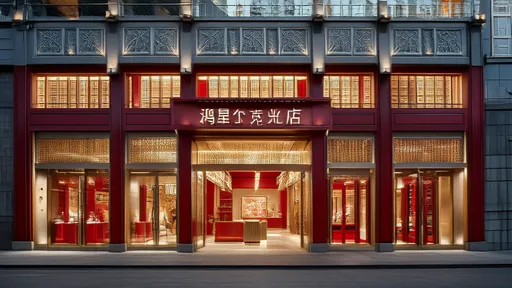
In the heart of Milan’s fashion district, a new player has emerged, turning heads and challenging the dominance of Western sportswear giants. Hongxing Erke, a Chinese sportswear brand once overshadowed by international competitors, has made a bold statement with its flagship store in Milan. This move marks a significant milestone in the brand’s "Go West 2.0" strategy, an ambitious plan to expand its global footprint and redefine its image.
Fashion

Museum IP Battle: The Metropolitan's Fashion Licensing Empire

By /Aug 13, 2025

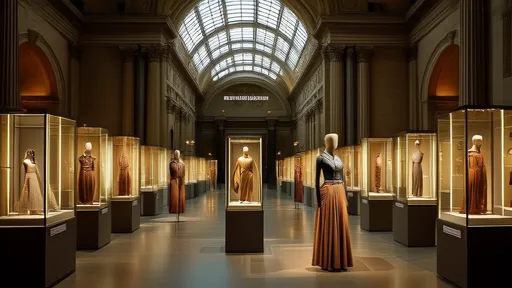
The Metropolitan Museum of Art has long been revered as a bastion of culture, housing some of the world’s most iconic artworks. But in recent years, the museum has expanded its influence far beyond its hallowed halls, venturing into the lucrative world of fashion licensing. The Met’s foray into fashion collaborations has sparked a fierce battle among brands vying for the prestige of associating with its illustrious name. This isn’t just about clothing—it’s about legacy, exclusivity, and the power of cultural branding in an increasingly competitive market.
Fashion

Fast Fashion Collaboration Trap: Investigation into the Exploitation of Designer Value

By /Aug 13, 2025

The glittering spectacle of fast fashion collaborations has become a cultural phenomenon, where high-street giants routinely partner with avant-garde designers or celebrity creatives. These limited-edition capsule collections generate frenzied queues outside stores and crash websites within minutes of launch. Yet behind the carefully orchestrated hype lies an uncomfortable truth: these partnerships often function as sophisticated mechanisms for extracting and commodifying creative labor while offering designers shockingly little in return.
Fashion

The Paradox of Niche Brands: When Indie Designs Go Viral

By /Aug 13, 2025

The fashion industry thrives on exclusivity, yet it simultaneously craves mass appeal. This paradox lies at the heart of what we now call the Indie Brand Paradox—the phenomenon where independent designers achieve mainstream success, only to face an identity crisis. When a niche label becomes a viral sensation, it must navigate the treacherous waters between authenticity and commercial viability. The very elements that made it unique—limited production runs, artisanal craftsmanship, subversive designs—often become casualties of scalability.
Fashion

Intelligent Knitting: Thermosensitive Fibers Automatically Regulate Ventilation Holes

By /Aug 13, 2025

The textile industry is undergoing a quiet revolution as smart knitting technologies merge with advanced material science. At the forefront of this innovation lies temperature-sensitive fibers capable of autonomously adjusting garment breathability—a breakthrough that could redefine comfort in athletic wear, medical textiles, and everyday apparel. Unlike traditional moisture-wicking fabrics that rely on passive diffusion, these dynamic textiles physically reconfigure their structure in response to thermal stimuli.
Fashion

Creative Director Survival Report: Breaking the Three-Year Curse Solution

By /Aug 13, 2025

The creative industry moves at breakneck speed, and nowhere is this more evident than in the precarious tenure of creative directors. For years, the "three-year curse" has haunted the profession—that mysterious point when even the most brilliant minds seem to hit an invisible wall. But something unexpected is happening across agencies and in-house studios worldwide: a growing number of creative leaders are cracking the code to longevity.
Fashion

Luminous Corduroy: Phosphorescent Materials Create Star Tracks in the Dark

By /Aug 13, 2025

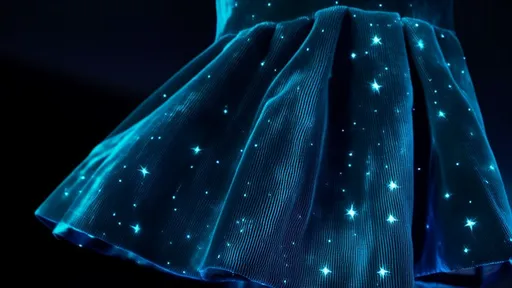
In an era where urban illumination often drowns out celestial wonders, a quiet revolution in textile technology is bringing the cosmos closer to home. Glow-in-the-dark corduroy fabric, embedded with advanced photoluminescent compounds, has emerged as an unexpected medium for capturing the ephemeral beauty of star trails within domestic spaces. This innovative material transcends its utilitarian origins, transforming ordinary home textiles into canvases that preserve celestial movements with remarkable fidelity.
Fashion

Spider Silk Protein Shirts: Biotech Disrupts the Definition of Luxury

By /Aug 13, 2025

The fashion industry stands on the brink of a biological revolution as spider silk protein shirts emerge from laboratories to challenge the very definition of luxury. For centuries, opulence in apparel has been synonymous with rare materials and artisanal craftsmanship – think Italian cashmere, Swiss lace, or Japanese denim. But in a quiet laboratory in San Francisco, a team of biotechnologists has been cultivating vats of silky protein filaments that could render these traditional status symbols obsolete.
Fashion

Self-Healing Denim: Microencapsulation Repair Technology Overcomes Hole Challenges

By /Aug 13, 2025

In a groundbreaking development for sustainable fashion, scientists have unveiled a revolutionary self-healing denim technology that could forever change how we deal with worn-out jeans. The innovation centers around microcapsule repair systems embedded within the fabric itself, offering what experts are calling "the holy grail" of textile durability.
Fashion

0.08mm Cashmere Extreme: Breakthrough in Nano Spinning Technology

By /Aug 13, 2025

The textile industry has long been chasing the elusive dream of spinning ultra-fine cashmere fibers, pushing the boundaries of what was once considered physically impossible. For decades, the 0.08mm diameter mark stood as an unbreakable barrier – until now. A groundbreaking development in nano-spinning technology has shattered this limitation, opening doors to a new era of luxury fabrics with unprecedented softness and thermal properties.
Fashion

Morandi Trap: When Low Saturation Becomes a New Aesthetic Dictate

By /Aug 13, 2025

In recent years, the muted, understated palette of Giorgio Morandi has seeped into every corner of visual culture—interior design, fashion, branding, and even digital interfaces. What began as an appreciation for subtlety has morphed into a pervasive aesthetic regime, one that dictates taste under the guise of sophistication. The "Morandi tone," with its chalky pinks, dusty blues, and washed-out beiges, is now the unofficial uniform of contemporary minimalism. But as this trend hardens into dogma, a quiet rebellion brews: when does restraint become repression?
Fashion

Dynamic Gradient Breakthrough: Liquid Crystal Fabric Achieves Automatic Color Change

By /Aug 13, 2025

In a groundbreaking leap for smart textiles, researchers have unveiled liquid crystal fabrics capable of dynamic color-shifting without external power sources. This innovation promises to revolutionize industries from fashion to military camouflage by creating materials that adapt to environmental changes in real time.
Fashion

Mineral Dye Revolution: Cosmic Deep Blue Dye Made from Meteorite Powder

By /Aug 13, 2025

In a groundbreaking fusion of celestial wonder and terrestrial artistry, scientists and artisans have unlocked the secrets of the cosmos to create an extraordinary new pigment: cosmic deep blue, derived from meteorite powder. This revolutionary development in mineral dyes promises to redefine the boundaries of color, sustainability, and human connection with the universe.
Fashion

Fluorescent Taming Guide: Breaking Through Office Safety Dress Code

By /Aug 13, 2025

In the corporate jungle where neutral tones reign supreme, a quiet revolution is brewing. Fluorescent hues—long banished to construction sites and rave parties—are making an unexpected comeback in professional settings. This chromatic insurgency isn’t about reckless self-expression; it’s a calculated strategy for visibility, safety, and psychological impact in modern workplaces.
Fashion

Urban Spectrum Showdown: Shanghai Blue vs. London Fog in Fashion Discourse

By /Aug 13, 2025

In the ever-evolving world of fashion, color serves as both a cultural signifier and a powerful tool for self-expression. Two iconic urban hues—Shanghai Blue and London Fog—have recently emerged as competing chromatic languages in global style narratives. These colors transcend mere aesthetic preferences; they embody distinct philosophies of urban life, historical legacies, and contemporary aspirations. The clash (and occasional fusion) of these tones reveals deeper currents about East-West fashion diplomacy in the post-pandemic era.
Fashion

The Paradox of 3D Sculpting from 2D: Secrets of Transforming Flat Patterns into Three-Dimensional Art

By /Aug 13, 2025

The art of transforming two-dimensional patterns into three-dimensional sculptures has long fascinated designers, mathematicians, and artists alike. At the heart of this transformation lies what some refer to as the "paradox of drape"—the seemingly magical leap from flat fabric or paper to a form that occupies space with volume, movement, and depth. This process, whether in fashion design, origami, or architectural modeling, challenges our understanding of how surfaces behave when freed from their planar constraints.
Fashion

Interstellar Universe: The Re-creation of New Chinese Symbols in a Space Theme"

By /Aug 13, 2025

The vast expanse of space has always served as a mirror to human culture, reflecting our deepest symbols and aspirations back to Earth. In recent years, an intriguing aesthetic fusion has emerged from China's space program - what cultural theorists are calling "Buckle Cosmos" - where traditional Chinese knotting techniques and architectural motifs collide with futuristic space technology.
Fashion

The Renaissance of Men's Lace: Gothic Aesthetics Returns to the Mainstream

By /Aug 13, 2025

The resurgence of lace in menswear is more than a fleeting trend—it’s a cultural reclamation. Once relegated to the fringes of fashion, lace is now stepping boldly into the mainstream, driven by a renewed fascination with Gothic aesthetics. Designers and wearers alike are embracing its delicate intricacy, not as a sign of fragility, but as a statement of subversion and sophistication. This revival isn’t merely about fabric; it’s a rebellion against rigid gender norms and a celebration of historical opulence reimagined for the modern man.
Fashion

Lace Heavy Metal: The Experimental Collision of Biker Jackets and Victorian Style

By /Aug 13, 2025

The fashion world thrives on contradictions, and few are as deliciously jarring as the marriage of lace and heavy metal. This season, designers are orchestrating a high-voltage collision between the delicate femininity of Victorian-inspired lace and the rebellious edge of motorcycle jackets. The result? A sartorial experiment that feels both nostalgic and dangerously modern.