As augmented reality try-on technology continues to revolutionize retail experiences, one question remains persistently unanswered: when will we achieve truly realistic simulation of gemstone fire and texture? The shimmering play of light within a diamond, the velvety depth of an emerald, or the mysterious glow of an opal—these are the holy grail of digital jewelry representation that continue to elude even the most advanced AR platforms.
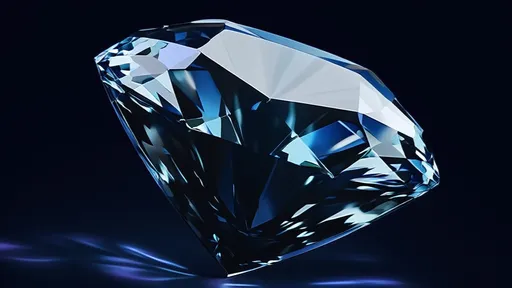
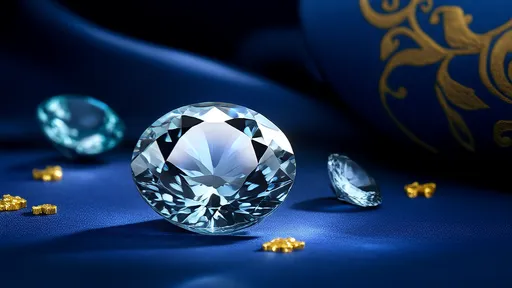
The fundamental challenge lies in the complex physics of light interaction with gemstones. Unlike clothing or makeup, which primarily involve surface properties and color, gemstones possess internal structures that refract, reflect, and disperse light in incredibly complex ways. Fire—that spectacular display of spectral colors—results from dispersion, where light separates into its component colors as it passes through the stone. Current AR technology struggles to replicate this phenomenon accurately because it requires real-time calculation of light paths through complex crystalline structures.
Texture representation presents another layer of complexity. The surface quality of a gemstone—whether it's the perfect polish of a faceted diamond or the characteristic organic texture of a pearl—requires microscopic-level detail that demands enormous computational power. Current mobile devices simply cannot handle the processing requirements for such detailed rendering while maintaining the smooth performance expected from AR experiences.
Hardware limitations significantly constrain progress in this area. The cameras on consumer smartphones cannot capture the precise lighting conditions necessary for accurate gemstone simulation. Without understanding the exact intensity, angle, and color temperature of ambient light, AR systems cannot properly calculate how a virtual gemstone should interact with its environment. This results in gemstones that appear flat, artificial, or disconnected from their surroundings.
The rendering pipeline itself presents substantial obstacles. Traditional computer graphics approaches use environment maps and pre-baked lighting, but these techniques fail to capture the dynamic nature of gemstone optics. Real-time ray tracing technology shows promise but remains too computationally intensive for mobile AR applications. Even desktop-grade hardware struggles with physically accurate gemstone rendering at interactive frame rates.
Material science complexity adds another dimension to the challenge. Different gemstones have unique optical properties—refractive indices, dispersion values, absorption spectra, and crystal structures—that must be individually modeled and calculated. Creating a universal system that can accurately represent everything from transparent diamonds to opaque turquoise requires solving numerous distinct optical problems rather than applying a single technical solution.
The human visual system further complicates matters through its subjective perception of quality. What makes a gemstone appear "real" involves subtle cues that go beyond physical accuracy—slight imperfections, microscopic surface variations, and the unique way light behaves around edges and facets. These nuances are exceptionally difficult to quantify and replicate algorithmically.
Recent advancements in machine learning offer glimmers of hope. Neural rendering techniques can potentially learn the complex relationships between lighting conditions and gemstone appearance from vast datasets of real gemstone imagery. However, collecting sufficient high-quality training data across diverse lighting conditions and gemstone types remains a monumental task. The variability is simply too great for current data collection methodologies.
The timeline for solving these challenges remains uncertain. Industry experts suggest we might see significant improvements within the next three to five years as mobile hardware continues to advance exponentially. The adoption of dedicated AI processors in smartphones, improvements in sensor technology, and advancements in real-time rendering algorithms all contribute to gradual progress. However, achieving truly photorealistic gemstone simulation likely requires breakthroughs in multiple technological areas simultaneously.
Some companies are taking alternative approaches by focusing on specific gemstone types or simplifying the problem space. Rather than attempting to create a universal gemstone rendering system, they're developing specialized solutions for particular jewelry categories. This targeted approach shows commercial promise even while the broader technical challenges remain unsolved.
The business implications are substantial. The jewelry industry represents a multi-billion dollar e-commerce opportunity that remains largely untapped due to the inability to properly showcase products online. Solving the gemstone simulation problem could transform how consumers shop for fine jewelry, potentially increasing conversion rates and reducing return rates significantly.
Consumer expectations continue to rise alongside technological capabilities. As AR becomes more prevalent in other shopping contexts—from trying on sneakers to placing furniture in your home—the pressure mounts for jewelry retailers to deliver equally compelling experiences. This creates both commercial incentive and technical imperative to solve the gemstone rendering challenge.
Looking forward, the solution will likely emerge from interdisciplinary collaboration between computer graphics researchers, material scientists, optical engineers, and jewelry experts. No single discipline possesses all the knowledge required to crack this complex problem. The integration of physical understanding with computational approaches appears most promising for eventual success.
While we cannot predict an exact date when AR will perfectly simulate gemstone fire and texture, the pace of technological advancement suggests we're moving steadily closer to this goal. Each year brings improvements in processing power, sensor technology, and algorithmic sophistication that collectively narrow the gap between virtual representation and physical reality.
The journey toward photorealistic gemstone AR involves numerous incremental advancements rather than a single breakthrough moment. As these pieces gradually come together, we can expect to see progressively more convincing simulations that eventually cross the threshold into true realism. Until then, the quest continues to capture nature's sparkle in digital form.

By /Aug 27, 2025
By /Aug 27, 2025

By /Aug 27, 2025
By /Aug 27, 2025

By /Aug 27, 2025
By /Aug 27, 2025

By /Aug 27, 2025
By /Aug 27, 2025
By /Aug 27, 2025

By /Aug 27, 2025
By /Aug 27, 2025

By /Aug 27, 2025

By /Aug 27, 2025

By /Aug 27, 2025

By /Aug 27, 2025
By /Aug 27, 2025
By /Aug 27, 2025
By /Aug 27, 2025
By /Aug 27, 2025

By /Aug 27, 2025
