Laboratory-Grown Colored Gemstones: Can They Create Colors That Don't Exist in Nature?

Aug 27, 2025 By

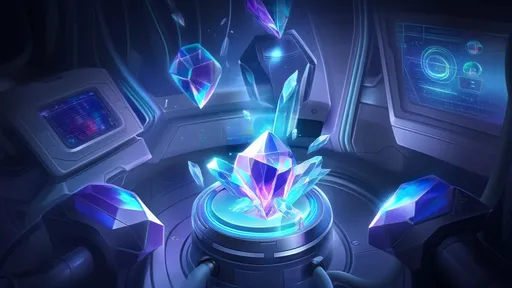
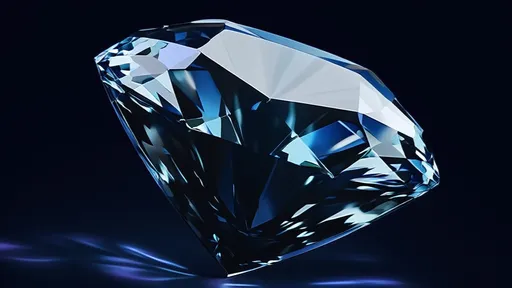
In the hushed, sterile environments of laboratories where science meets artistry, a quiet revolution is unfolding. For centuries, the allure of colored gemstones has been inextricably linked to the mysterious and slow-moving forces of nature. Deep within the Earth's crust, over millions of years, a precise alchemy of heat, pressure, and trace elements conspired to create the rubies, sapphires, and emeralds that became symbols of power, beauty, and desire. Today, that ancient recipe book is being rewritten. The question now captivating gemologists, scientists, and luxury consumers alike is not just about replicating nature's palette, but surpassing it: Can we create colors that have never before existed on Earth?

The journey of lab-grown gems, often termed 'synthetic' or 'created,' began not with a quest for the novel, but with a drive for the accessible. The initial goal was to produce flawless, ethical, and affordable versions of nature's most coveted stones. Using methods like High Pressure High Temperature (HPHT) and Chemical Vapor Deposition (CVD), scientists learned to accelerate geological timeframes from eons to weeks. They successfully recreated the deep crimson of ruby, the serene blue of sapphire, and the vibrant green of emerald. The success was monumental, but it was, in a sense, an act of meticulous imitation. The true frontier, the uncharted territory, lay in moving beyond imitation into the realm of pure invention.

This is where the concept of a "color competition" emerges. It is not a formal contest with judges and prizes, but rather the relentless pursuit of innovation by laboratories and companies worldwide. The challenge is a scientific and artistic one: to manipulate the very atomic structure of crystals to produce hues that are entirely new. The color of a gemstone is not paint applied to a surface; it is a fundamental property of its crystalline structure and the specific impurities or defects within that lattice. In corundum (the mineral family of ruby and sapphire), for instance, chromium creates red, iron and titanium create blue, and vanadium can create a color-change effect. The laboratory provides a playground to experiment with these variables with god-like precision.

The tools for this creation are profound. Scientists can introduce dopants—trace elements—that are either not found in natural geological environments or are present in such minuscule, ineffective amounts that they never produce a visible color. Imagine introducing elements from the far corners of the periodic table into a crystal growth chamber. What color might a sapphire turn if doped with europium or praseodymium? The results can be startling and unpredictable. Furthermore, the conditions of growth—the precise levels of heat and pressure—can be manipulated to create crystal defects that absorb light in completely novel ways. These are not slight variations on a theme; they are entirely new compositions of light and matter.

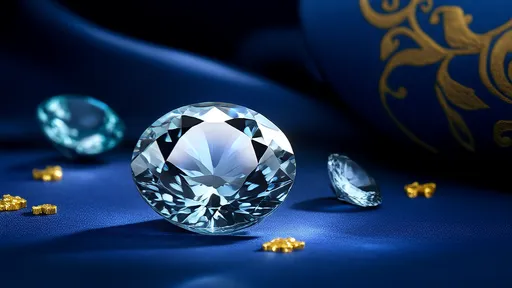
We are already witnessing the fruits of this endeavor. While many lab-grown gems on the market are intended to mimic their natural counterparts, a growing segment is proudly hyperunique. Labs are producing corundum in vivid, electric shades of magenta, lavender, and peach that are either exceptionally rare or completely absent in nature. Some companies specialize in creating "fantasy" colors: intense, saturated neons, deep metallic blues with a subaquatic glow, or fiery oranges that seem to contain their own internal light source. These stones do not try to be something else; they celebrate their own unprecedented existence.

However, this brave new world of color is not without its complexities and controversies. The very term "color" is subjective, residing as much in human perception as in wavelength measurements. Gemological institutes, the traditional arbiters of a gem's identity and value, now face a novel challenge: how to classify and describe a stone for which no natural reference exists. The established language of gemology is built upon a foundation of natural occurrences. How does one grade the cut, clarity, and color of something that is, by definition, unnatural? This creates a fascinating tension between the innovative spirit of the lab and the traditionalist foundations of the gem trade.

Beyond classification lies the question of value and desire. A significant part of a natural gemstone's allure is its story—its ancient origin and its rarity. A lab-created stone with a never-before-seen color has a different story: one of human ingenuity, scientific achievement, and artistic expression. Its value is derived not from scarcity, but from its beauty and the technological marvel it represents. The market is still determining how to appraise this new form of beauty. For a younger, ethically-conscious generation, however, a stone's provenance and its lower environmental impact can be more compelling narratives than geological antiquity.

Looking forward, the potential seems limited only by the imagination and the boundaries of materials science. As growth techniques become more sophisticated, we might see gems that display chameleonic color shifts far beyond the current day-to-night changes, or stones engineered to interact with light in ways that produce holographic or iridescent effects without the need for surface coatings. The collaboration between scientists, designers, and artists will be crucial, pushing these materials into new realms of jewelry and art that are currently unimaginable.

So, can we create colors that nature never did? The resounding answer from the labs is yes. We are no longer mere mimics of nature; we have become collaborators, adding new pages to the book of beauty that nature started writing billions of years ago. This color competition is not about defeating nature, but about expanding the spectrum of human experience and expression. It proves that while nature is an incredible artist, it is not the only one. In the silent growth chambers of modern labs, a new palette is being born, promising a future where the gems we cherish are limited not by what the Earth provided, but only by the boundless scope of our own creativity.
Recommend Posts
Jewelry

Exploring the Gemstone Cutting Capital: A Day in the Life of Jaipur's Colored Gemstone Cutting Industry

By /Aug 27, 2025

In the heart of Rajasthan, the Pink City of Jaipur glows with a legacy that transcends its historic walls and bustling markets. Known globally as the gemstone cutting capital of the world, Jaipur’s relationship with colored gemstones is both an art and an economy, woven into the daily lives of its people. The narrow lanes of the old city, particularly in areas like Johari Bazaar, are where the magic happens—where rough, unassuming stones are transformed into dazzling jewels that find their way into collections and crowns across the world.
Jewelry

Soundwave Custom Jewelry: Permanently Engraving a Soundwave Pattern on the Inside of a Ring

By /Aug 27, 2025

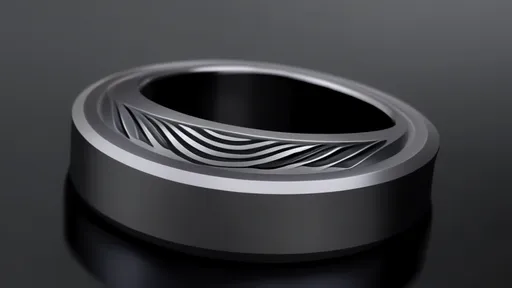
In an age where personalization has become the cornerstone of meaningful consumer products, a new frontier is emerging at the intersection of technology and sentiment: soundwave jewelry. This innovative concept transforms intangible, cherished sounds—be it a loved one’s voice, a child’s laughter, or even a favorite musical riff—into a permanent, wearable art form. By engraving the unique visual representation of a soundwave onto the inner band of a ring, companies are offering individuals a deeply personal and modern way to carry their most precious memories with them, always.
Jewelry

Laboratory-Grown Colored Gemstones: Can They Create Colors That Don't Exist in Nature?

By /Aug 27, 2025

In the hushed, sterile environments of laboratories where science meets artistry, a quiet revolution is unfolding. For centuries, the allure of colored gemstones has been inextricably linked to the mysterious and slow-moving forces of nature. Deep within the Earth's crust, over millions of years, a precise alchemy of heat, pressure, and trace elements conspired to create the rubies, sapphires, and emeralds that became symbols of power, beauty, and desire. Today, that ancient recipe book is being rewritten. The question now captivating gemologists, scientists, and luxury consumers alike is not just about replicating nature's palette, but surpassing it: Can we create colors that have never before existed on Earth?
Jewelry

When Can AR Try-On Technology Truly Simulate the Fire and Texture of Gemstones?

By /Aug 27, 2025

As augmented reality try-on technology continues to revolutionize retail experiences, one question remains persistently unanswered: when will we achieve truly realistic simulation of gemstone fire and texture? The shimmering play of light within a diamond, the velvety depth of an emerald, or the mysterious glow of an opal—these are the holy grail of digital jewelry representation that continue to elude even the most advanced AR platforms.
Jewelry

The Next Stop of Customized Democracy: 3D Scanning for Perfect Fit

By /Aug 27, 2025

The age of mass production is quietly giving way to a new paradigm of hyper-individualization, and nowhere is this shift more palpable than in the world of apparel and wearable goods. For decades, consumers have been forced to adapt their bodies to the rigid, standardized sizes dictated by the fashion industry—a system fraught with compromise and frustration. The promise of a perfect fit has always been a siren's call, but the tools to achieve it at scale remained elusive. That is, until now. The convergence of advanced 3D scanning technology, sophisticated data analytics, and on-demand manufacturing is poised to dismantle the archaic sizing chart forever, heralding the true democratization of custom-fit clothing and products for the masses.
Jewelry

The Collectible Value of Antique Coin Jewelry: A Tug-of-War Between History and Gold Content

By /Aug 27, 2025

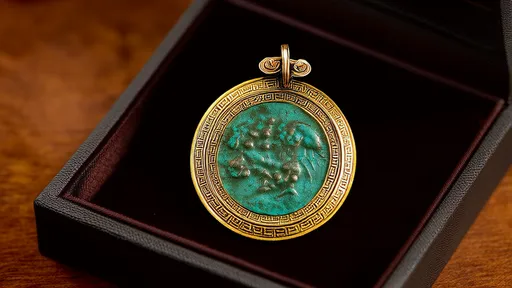
In the intricate world of collectibles, few categories present as compelling a duality as coin jewelry, where the allure of precious metals intersects with the profound weight of history. Each piece tells a dual narrative: one of intrinsic material value, often measured in karats and grams, and another of cultural and chronological significance, measured in stories and centuries. This unique interplay between bullion and background creates a fascinating landscape for collectors, historians, and investors alike, where value is seldom a simple calculation but rather a complex equation of metal, memory, and market desire.
Jewelry

Safety Standards for Baby Bracelets: A Comparative Analysis of Mandatory Regulations for Children's Jewelry Worldwide

By /Aug 27, 2025

The global market for children's jewelry, particularly baby bracelets, operates under a complex web of regulations designed to protect the most vulnerable consumers. While the sentimental value of these items is universal, the legal frameworks governing their safety vary dramatically from one nation to the next. This creates a challenging landscape for manufacturers, retailers, and most importantly, for parents seeking to make informed choices.
Jewelry

The Universe in an Inch" of Men's Cufflinks: Evolution from Classic to Fun Styles

By /Aug 27, 2025

In the meticulous world of men's fashion, few accessories carry the weight of history and personality quite like the cufflink. These small yet significant adornments have long been more than mere functional fasteners; they are miniature canvases that reflect the wearer's taste, status, and even whimsy. The journey of the cufflink from a purely utilitarian object to a celebrated element of sartorial expression is a fascinating tale of craftsmanship, cultural shifts, and individual flair. Often described as a "universe in a square inch," the cufflink encapsulates a world of design, symbolism, and artistry within its compact form.
Jewelry

Reverse Thinking in High-End Jewelry Watches: Crafting Gemstone Cases for Movements"

By /Aug 27, 2025

In the rarefied world of haute horlogerie, a quiet revolution is unfolding—one that challenges the very foundations of watchmaking tradition. For centuries, the process has been unequivocal: first, the case, then the movement. The chassis was designed, and the mechanical heart was engineered to fit within its predetermined confines. This was the unspoken dogma, the industry's immutable law. But now, a cadre of visionary maisons is boldly inverting this equation, embarking on an audacious journey where the movement is no longer an afterthought but the genesis of creation. This is the era of the gem-set movement, a paradigm where the engine dictates the form, and the exterior world of gemstones is sculpted in harmonious response.
Jewelry

Taking Jewelry Photos at Home: Tips for Shooting Professional-Quality Clarity with a Smartphone

By /Aug 27, 2025

In the age of digital marketplaces and social media, the ability to capture stunning, high-quality images of jewelry from the comfort of your home has become an invaluable skill. Whether you are a small business owner, an online seller, or simply looking to document a cherished piece, achieving that coveted "lab-grade" or appraisal-level clarity with just your smartphone might seem like a daunting task reserved for professionals with expensive equipment. However, with a thoughtful approach to your environment, a mastery of your phone's capabilities, and an attention to the subtle art of presentation, it is an entirely attainable goal. This guide will walk you through the foundational principles and advanced techniques to transform your mobile photography and produce images that are not only beautiful but also rich in detail and accuracy, doing justice to the craftsmanship and sparkle of your precious items.
Jewelry

The Autism" of Jewelry Storage: Why Is It Best to Store Gems Separately?

By /Aug 27, 2025

In the hushed world of gemstone preservation, a curious yet critical principle governs the practice of collectors and jewelers alike: the solitary confinement of each precious stone. This is not a matter of mere preference or organizational fastidiousness; it is a fundamental tenet born from a deep understanding of the unique and often delicate physical and chemical properties inherent to each gem. To store them together is to invite a silent, slow-motion disaster, a degradation of beauty and value that can occur without a single visible sign until it is tragically too late.
Jewelry

Jewelry Exchange on the Silk Road: What Did the Hu People Figurines Wear in Tang Tri-Colored Pottery?

By /Aug 27, 2025

The Silk Road was not merely a conduit for silk and spices; it was a vibrant artery of cultural and artistic exchange that profoundly shaped the aesthetic and material cultures of the civilizations it connected. Among the most captivating testaments to this exchange are the Tang Sancai, or tri-colored glazed ceramics, of China's Tang Dynasty (618-907 AD). These artifacts, primarily funerary figures, serve as a frozen tableau of a remarkably cosmopolitan era. Within this rich visual archive, the depictions of Central and Western Asian foreigners, known collectively as "Hu" people, are particularly illuminating. Their meticulously rendered attire and accessories offer an unparalleled window into the cross-continental journey of jewelry styles, materials, and craftsmanship along the Silk Road.
Jewelry

Animal Allegories in Jewelry: The Symbolism of Lions, Snakes, and Peacocks Across Cultures

By /Aug 27, 2025

Throughout human history, jewelry has served not only as adornment but as a profound medium for storytelling and cultural expression. Among the most enduring motifs are those drawn from the animal kingdom, with creatures like the lion, the serpent, and the peacock recurring across civilizations. These are not merely decorative choices; they are rich with layered meanings, myths, and messages that vary fascinatingly from one culture to another. The symbolism embedded in these animal forms transforms a piece of jewelry into a talisman, a status symbol, or a narrative piece, speaking a silent language understood across time and geography.
Jewelry

Chinese Ming and Qing Dynasties Head Ornaments: What Components Are Included in a Complete Set?

By /Aug 27, 2025

In the opulent courts of Ming and Qing China, the elaborate headdresses known as toumian (头面) represented far more than mere ornamentation; they were intricate symbols of status, artistry, and cultural identity worn by noblewomen. A complete set of toumian was a masterpiece of craftsmanship, comprising numerous components that together created a harmonious and imposing visual statement. Each piece was meticulously designed to complement the others, often crafted from precious materials like gold, silver, jade, pearls, and kingfisher feathers, embodying both aesthetic refinement and social hierarchy.
Jewelry

Mughal Indian Carved Gems: How Does the Knife Work Reflect the Ultimate Spirit of Miniature Painting?

By /Aug 27, 2025

The art of Mughal gemstone carving represents one of the most exquisite and spiritually resonant traditions in the history of craftsmanship. Emerging during the reign of the Mughal Empire in the Indian subcontinent, this intricate practice was deeply intertwined with the philosophical and aesthetic principles of miniature painting, creating a unique synthesis of visual and tactile artistry. The gem carvers, or naqqash, were not merely artisans but interpreters of a cultural ethos that prized precision, devotion, and the manifestation of divine beauty in material form.
Jewelry

Annual Jewelry Consumption Report Interpretation: Which City's Residents Love Buying Diamonds the Most?

By /Aug 27, 2025

In the glittering world of luxury goods, diamonds have long held a special place, symbolizing not just affluence but also enduring love and milestone celebrations. The recently released Annual Jewelry Consumption Report provides a fascinating deep dive into consumer behaviors, revealing intriguing patterns about which urban centers are driving diamond demand. While many might assume global fashion capitals like Paris or financial hubs like New York would lead, the data tells a more nuanced and surprising story.
Jewelry

Sustainable Development Reports of Jewelry Brands: Which Initiatives Truly Reduce Environmental Footprint?

By /Aug 27, 2025

In the glittering world of high-end jewelry, a quiet revolution is taking place behind the polished storefronts and exquisite displays. As consumers increasingly demand transparency and ethical practices, luxury jewelry brands are publishing detailed sustainability reports that reveal substantive efforts to minimize their environmental impact. These documents, often exceeding a hundred pages, move beyond mere marketing to demonstrate measurable progress in reducing the industry’s considerable footprint.
Jewelry

Beware of Detail Traps in Custom Jewelry Contracts: From Main Stone Substitution to Gold Weight Errors

By /Aug 27, 2025

In the intricate world of bespoke jewelry, the allure of creating a unique piece often overshadows the meticulous scrutiny a custom contract demands. Clients embark on this journey filled with dreams and sentimental visions, yet many overlook the dense legal language that could potentially turn their dream into a costly misadventure. The process, while artistic and personal, is fundamentally a significant financial transaction and a complex manufacturing agreement. Without a clear, detailed, and protective contract, customers leave themselves vulnerable to a range of issues, from minor disappointments to substantial financial loss.
Jewelry

The 'Origin Premium' of Colored Gemstones: Can the Legend of Kashmir Sapphires Be Replicated?"

By /Aug 27, 2025

In the world of colored gemstones, few phenomena are as intriguing or as commercially significant as the concept of origin-based premiums. Among these, the legendary status of Kashmir sapphires stands as the ultimate benchmark, a story woven into the very fabric of gemological history and market desire. The question that perpetually lingers in the minds of miners, dealers, collectors, and investors alike is whether such a legend can ever be replicated. Can another origin achieve a similar aura of myth, scarcity, and unwavering value?
Jewelry

Structural Analysis of Architectural" Jewelry: How to Infuse Static Accessories with Momentum

By /Aug 27, 2025

In the world of high jewelry, a fascinating evolution is taking place—one where the static nature of adornment is being challenged by designs that pulse with dynamic energy. This movement, often described as "architectural jewelry," draws inspiration from the principles of structural engineering, spatial dynamics, and kinetic art to create pieces that appear to be in motion even when at rest. The concept revolves around manipulating form, balance, and material to evoke a sense of fluidity, tension, or transformation, turning wearers into living galleries of kinetic expression.