In the world of colored gemstones, few phenomena are as intriguing or as commercially significant as the concept of origin-based premiums. Among these, the legendary status of Kashmir sapphires stands as the ultimate benchmark, a story woven into the very fabric of gemological history and market desire. The question that perpetually lingers in the minds of miners, dealers, collectors, and investors alike is whether such a legend can ever be replicated. Can another origin achieve a similar aura of myth, scarcity, and unwavering value?
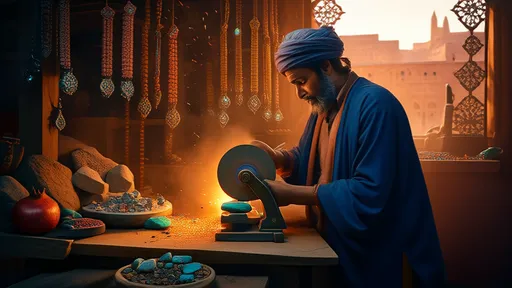
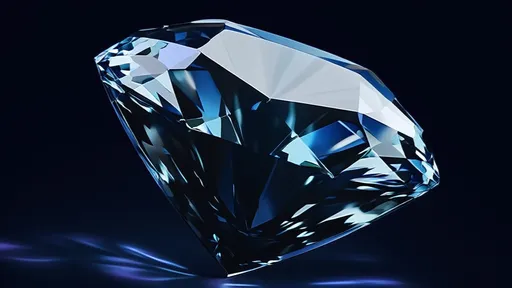
The tale of Kashmir sapphires begins in the late 19th century, high in the remote and rugged Himalayas. Following a landslide in the Zanskar region around 1881, local shepherds discovered vivid blue pebbles that would soon captivate the world. The Maharaja of Kashmir quickly secured the area, and for just a few short years—a mere decade of intense mining—the world was graced with what many gemologists still consider the finest sapphires ever unearthed. Their signature velvety blue hue, often described as "cornflower blue," is attributed to a unique combination of trace elements and microscopic silk inclusions that scatter light, creating a soft, sleepy brilliance unmatched by sapphires from any other locale.
The mining period was brutally short, and the output was incredibly limited. The harsh climate and political difficulties sealed the fate of the Kashmir mines almost as soon as it was written, entrenching their output in immediate scarcity. This combination of exceptional quality and extreme rarity at the very dawn of their discovery created a perfect storm for legend-building. They became the stuff of auction house records, museum centerpieces, and whispered tales of unparalleled beauty.
This established the foundational pillars of the "origin premium": objectively superior aesthetic characteristics (color, clarity, brilliance) and a historically verifiable, severely limited supply. The premium is not merely a surcharge; it is a value multiplier, often elevating the price of a Kashmir sapphire to several times that of an identical-quality stone from Burma, Sri Lanka, or Madagascar. This premium is fiercely protected by a robust and multi-layered system of certification. Laboratories like the Gübelin Gem Lab and the SSEF in Switzerland have developed sophisticated geochemical fingerprinting techniques to definitively separate the true Kashmir article from imitations or stones from newer deposits that may visually resemble them.
So, with this blueprint in hand, can the market create another Kashmir? The answer is complex, lying at the intersection of geology, economics, and pure narrative. Several modern candidates have emerged, each attempting to capture a slice of that legendary status. Perhaps the most successful example in recent memory is Paraíba tourmaline. Discovered in the late 1980s in the Brazilian state of Paraíba, these neon-blue and green tourmalines, colored by copper and manganese, were a sensation. Their electric, almost unnatural color was entirely new to the market. Like Kashmir, the initial find was small and quickly exhausted, causing prices to skyrocket.
However, the narrative was soon complicated. Similar copper-bearing tourmalines were later found in Mozambique and Nigeria. While gemological labs can often distinguish between the origins, the market had to grapple with a new reality: the "Paraíba" color was not unique to one Brazilian hill. The premium for Brazilian Paraíba still exists, but it is now a more nuanced conversation, shared with top-quality Mozambican material. This highlights a critical barrier to replicating Kashmir's uniqueness: the near-impossibility of maintaining a geological monopoly in a globally connected world where exploration is ongoing.
Another contender is the cobalt-blue spinel from Vietnam's Lục Yên district. These stones possess a dazzling, vibrant blue rivaling the finest sapphires, and their scarcity is unquestionable. They command impressive premiums and are highly sought after by connoisseurs. Yet, they remain a niche collector's stone, lacking the historical gravitas and broad recognition of a Kashmir sapphire. The legend of Kashmir was built over a century, its reputation burnished by time and adorned by royalty. Modern discoveries lack this crucial element of time and historical embeddedness.
Beyond history and scarcity, the market itself has changed dramatically. The gem trade is now global, transparent, and incredibly fast. News of a new discovery spreads in hours, not months. Mining technology is advanced, meaning a deposit can be exploited more thoroughly and quickly than ever before. This modern efficiency works against the creation of legend; it is harder to create an aura of mysterious, unreachable scarcity when a mine's output can be live-streamed on social media and its stones sold via online auctions a week after they are pulled from the earth.
Furthermore, consumer consciousness has evolved. While origin remains a powerful value driver, an increasing segment of the market is also concerned with ethical sourcing and sustainability. A new origin premium in the 21st century may need to be built not just on beauty and rarity, but on a verified story of ethical mining practices and community benefit—a narrative dimension the historical Kashmir mines certainly never had to consider.
Lab-grown gemstones present another formidable challenge to the very concept of origin value. As technology advances, labs can now replicate the chemical and physical properties of even the most celebrated natural stones with astonishing accuracy. While the market for fine natural gems with origin premiums remains strong, the existence of a perfect, affordable, and ethically straightforward alternative inevitably reshapes the conversation around value and rarity, potentially capping the growth potential of any new origin-based legend.
In conclusion, while the allure of the origin premium remains potent, the specific alchemy that created the Kashmir legend—a perfect storm of unparalleled quality, instantaneous and absolute scarcity, a romantic historical narrative, and a pre-globalized world—is likely impossible to recreate in its entirety. The market may see new origins rise to prominence and command significant premiums, as Paraíba tourmaline and Vietnamese spinel have. They will be legends in their own right, defined by the values of our time: stunning beauty, verified rarity, and perhaps a responsible provenance.
But the crown of Kashmir appears secure. It is less a market price and more a cultural artifact, a relic from a different era of discovery. Its value is sustained not just by what it is, but by the timeless story it tells. Future legends will be written, but they will be different stories, for a different world. The original will likely remain just that—original, inimitable, and forever legendary.
By /Aug 27, 2025

By /Aug 27, 2025

By /Aug 27, 2025
By /Aug 27, 2025

By /Aug 27, 2025
By /Aug 27, 2025

By /Aug 27, 2025
By /Aug 27, 2025

By /Aug 27, 2025

By /Aug 27, 2025

By /Aug 27, 2025
By /Aug 27, 2025
By /Aug 27, 2025

By /Aug 27, 2025
By /Aug 27, 2025
By /Aug 27, 2025
By /Aug 27, 2025

By /Aug 27, 2025
By /Aug 27, 2025
By /Aug 27, 2025
