In the hushed world of gemstone preservation, a curious yet critical principle governs the practice of collectors and jewelers alike: the solitary confinement of each precious stone. This is not a matter of mere preference or organizational fastidiousness; it is a fundamental tenet born from a deep understanding of the unique and often delicate physical and chemical properties inherent to each gem. To store them together is to invite a silent, slow-motion disaster, a degradation of beauty and value that can occur without a single visible sign until it is tragically too late.
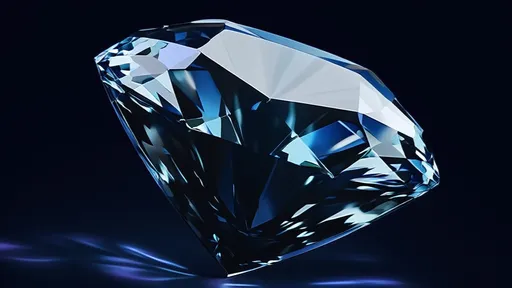
The most immediate and visually apparent danger lies in the realm of physical damage. Gemstones, for all their perceived indestructibility, possess a range of hardnesses. The Mohs scale, a comparative measure from talc at 1 to diamond at 10, illustrates this vast spectrum. A diamond, sitting proudly at the apex of this scale, can effortlessly scratch and abrade any other gem it comes into contact with. Imagine a velvet pouch containing a diamond, a sapphire, and an emerald. As the pouch is moved, handled, or even simply sits in a drawer subject to minor vibrations, the diamond acts like a microscopic grinding wheel, relentlessly scouring the surfaces of its softer companions. The sapphire, a 9 on the Mohs scale, might fare slightly better, but it too will accumulate a network of fine scratches that will cloud its luster and necessitate costly repolishing. The emerald, a much softer beryl variant around 7.5-8, would be brutally scarred, its polish dulled and its facets rounded. This abrasive warfare is a one-way street, resulting in a collection of damaged goods, their collective value significantly diminished.
Beyond the visible scratches lurks a more insidious threat: chemical incompatibility. Gems are not inert lumps of color; they are complex crystalline structures with specific chemical compositions that can react with their environment and, crucially, with each other. This is where the concept of "gemstone loneliness" transcends metaphor and becomes a practical chemical imperative. Certain gems are particularly vulnerable. A prime example is the interaction between pearls or opals and harder, desiccating stones. Pearls are organic, composed primarily of calcium carbonate and a protein called conchiolin. They contain a small amount of water, which is essential to their iridescence and structural integrity. If stored in a confined space with a desiccant-like material—even another gem that inherently draws moisture—pearls can dehydrate, leading to cracking, crazing, and a loss of their characteristic orient. Similarly, opals, with their unique water content (often between 3-10%), are notoriously prone to crazing if they lose moisture too quickly. Storing them alongside minerals that might accelerate this drying process is a recipe for ruin.
Furthermore, some gems can off-gas or exhibit subtle chemical exchanges that are detrimental to their neighbors. This is a less common but well-documented phenomenon among collectors. For instance, certain varieties of minerals might have microscopic surface impurities or be susceptible to tarnishing in a way that could transfer or catalyze a reaction on a nearby, more stable stone. While not every combination is volatile, the risk is ever-present and entirely avoidable through simple isolation. The stable, inert environment of an individual container acts as a protective barrier, ensuring that each gem's microclimate remains pure and untainted by the potentially harmful exhalations of its neighbors.
The argument for solitary storage extends beyond mere protection from harm; it is also about the preservation of identity and value. A gemstone's worth is intrinsically tied to its condition. Two seemingly identical stones can have a vast difference in price based on the perfection of their polish, the clarity of their facets, and the intensity of their color. A single scratch, a dulled surface, or a hairline crack caused by improper storage can slash its market value by a significant percentage, often far more than the cost of investing in proper storage solutions would have been. For high-value collector pieces or heirloom jewelry, this is not a trivial concern but a fundamental aspect of asset management. Separate storage is the cheapest and most effective insurance policy one can purchase for a gem collection.
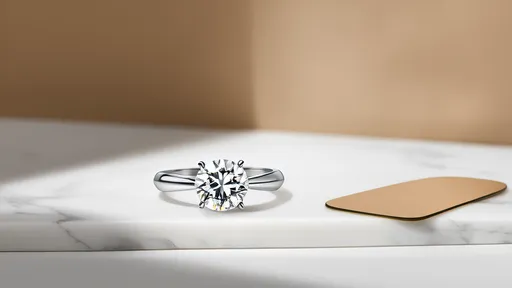
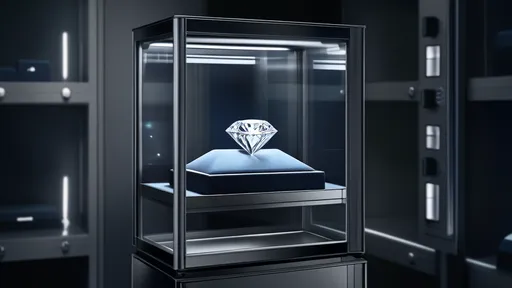
Implementing this philosophy does not require a bank vault or a museum-grade conservation lab. The solutions can be both elegant and simple. The most basic is the use of individual soft-cloth pouches, preferably made from untreated, acid-free materials like muslin or flannel. For better organization and slightly more protection, compartmentalized boxes with fabric-lined dividers are excellent, ensuring each stone has its own dedicated, cushioned space without any risk of contact. For the ultimate protection, especially for pieces that are not frequently accessed, individual gem jars or acrylic boxes provide a rigid barrier against both physical pressure and environmental fluctuations. The key is that each unit, whether a pouch or a box, contains one and only one item.
In the end, the practice of storing gems alone is a gesture of profound respect for their individual nature. It is an acknowledgment that each stone is a unique masterpiece of geological art, with its own strengths, vulnerabilities, and requirements for longevity. It is a rejection of the convenience of mass storage in favor of the meticulous care that true beauty demands. By granting each gem its deserved solitude, we become not just owners or collectors, but guardians. We commit to preserving their fire, their color, and their structural integrity exactly as we found them, ensuring they can continue to captivate and inspire for generations to come, untouched and unmarred by the quiet chaos of communal confinement.

By /Aug 27, 2025

By /Aug 27, 2025

By /Aug 27, 2025
By /Aug 27, 2025

By /Aug 27, 2025
By /Aug 27, 2025
By /Aug 27, 2025
By /Aug 27, 2025

By /Aug 27, 2025
By /Aug 27, 2025
By /Aug 27, 2025

By /Aug 27, 2025

By /Aug 27, 2025

By /Aug 27, 2025
By /Aug 27, 2025
By /Aug 27, 2025
By /Aug 27, 2025

By /Aug 27, 2025
By /Aug 27, 2025
By /Aug 27, 2025
