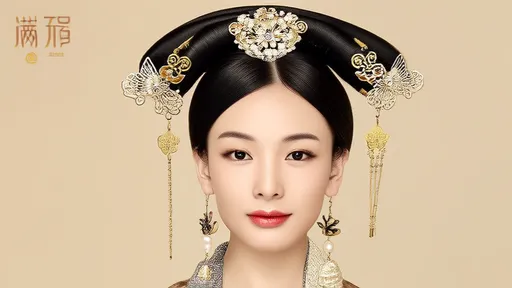
In the opulent courts of Ming and Qing China, the elaborate headdresses known as toumian (头面) represented far more than mere ornamentation; they were intricate symbols of status, artistry, and cultural identity worn by noblewomen. A complete set of toumian was a masterpiece of craftsmanship, comprising numerous components that together created a harmonious and imposing visual statement. Each piece was meticulously designed to complement the others, often crafted from precious materials like gold, silver, jade, pearls, and kingfisher feathers, embodying both aesthetic refinement and social hierarchy.
The foundation of any toumian set was the dianzi (钿子), a rigid cap or crown that served as the base onto which other ornaments were attached. Typically made of black velvet or silk stretched over a wire frame, the dianzi provided structural support for the heavier elements. It was often adorned with minimal embedded decorations, such as small pearls or metal filigree, ensuring it remained both functional and elegant. The dianzi varied in style—some were relatively simple for daily wear, while others, reserved for formal occasions, were more elaborate and expansive.
Central to the toumian were the fengguan (凤冠) or phoenix crowns, which were detachable pieces featuring motifs of phoenixes, dragons, and other auspicious symbols. These crowns were lavishly decorated with gemstones, pearls, and kingfisher feathers, often arranged in symmetrical patterns. The phoenix, a symbol of grace and virtue, was particularly prominent, sometimes depicted with wings outstretched as if in flight. The fengguan was not just a display of wealth but also a marker of marital status and nobility, frequently worn by brides and imperial consorts during ceremonies.
Flanking the crown were the chai (钗) and buyao (步摇), hairpins designed both to secure the headdress and to add dynamic beauty. Chai were typically double-pronged pins, often featuring delicate engravings or inlaid stones, while buyao were more elaborate, with dangling pendants that trembled and shimmered with the wearer's movements—hence their name, which translates to "step shakes." These pendants might include strings of pearls, tiny bells, or jade charms, creating a gentle, melodic sound that was considered enchanting and refined.
Complementing these were the dianjin (点金) or forehead ornaments, which rested on the brow or extended slightly above it. These pieces, often shaped like clouds, flowers, or abstract patterns, were crafted from gold or silver and embedded with semiprecious stones. They served to frame the face and draw attention to the wearer's expressions, enhancing her dignity and beauty. In some sets, dianjin were connected to side pieces that swept back along the temples, creating a cohesive flow from front to back.
Side ornaments, known as erbianshi (二边饰) or similar terms, included elements like the yuzhen (玉珍), jade hairpins that extended horizontally from the sides of the headdress. These were often carved with intricate designs, such as lotuses or bats (symbols of happiness), and provided balance to the overall structure. Additionally, liusu (流苏), or tassels, hung from the sides or back, made of silk threads intertwined with metal threads and small beads, adding movement and texture to the ensemble.
At the rear, the houwei (后尾) or back pendants were crucial for completing the silhouette. These could be long, cascading chains of pearls or metalwork that draped down the back, sometimes ending in decorative clasps or charms. They emphasized the wearer's posture and grace, as their length required deliberate, measured movements. In more extravagant sets, houwei might incorporate motifs like paired fish or butterflies, symbolizing conjugal harmony and joy.
Other components included huasheng (花胜), floral-shaped ornaments that were pinned throughout the headdress to fill gaps and add bursts of color, often made with enamel or painted details. Zan (簪), simpler single-pronged pins, were used for practical securing but also featured small decorative heads. Together, these elements formed a dense, layered arrangement that covered much of the head, leaving only the face visible—a testament to the wearer's elevated status.
The creation of a full toumian set was a collaborative effort among skilled artisans, including goldsmiths, jewelers, and embroiderers, often taking months or even years to complete. Each piece was custom-made to fit the wearer and occasion, with variations seen between the Ming Dynasty's relatively restrained elegance and the Qing Dynasty's more exuberant, densely ornamented styles. Beyond their beauty, these headdresses conveyed messages through symbolism—for example, dragons denoted imperial connection, while peaches represented longevity.
In modern times, toumian are cherished as cultural relics, displayed in museums and studied as examples of historical fashion. They continue to inspire contemporary designers and feature in period dramas, keeping the legacy of Chinese imperial splendor alive. Understanding the components of a complete toumian offers insight into a world where artistry and identity were woven into every strand of hair, reflecting the profound depths of traditional Chinese aesthetics.
By /Aug 27, 2025
By /Aug 27, 2025
By /Aug 27, 2025
By /Aug 27, 2025

By /Aug 27, 2025
By /Aug 27, 2025
By /Aug 27, 2025
By /Aug 27, 2025
By /Aug 27, 2025
By /Aug 27, 2025
By /Aug 27, 2025
By /Aug 27, 2025
By /Aug 27, 2025
By /Aug 27, 2025
By /Aug 27, 2025
By /Aug 27, 2025
By /Aug 27, 2025

By /Aug 27, 2025
By /Aug 27, 2025
By /Aug 27, 2025
